
Same Title, Different Weight: The Global Map of 55 MMA Belts and the Structural Deception Nobody Wants to Read
**Core answer**: ONE Championship's weight classes are offset approximately one full tier heavier than UFC/PFL standards — ONE middleweight is 205 pounds versus UFC's 185 pounds. This makes cross-promotion title comparisons structurally misleading, as identically named belts represent different body-weight tiers. **Key facts**: - ONE light heavyweight limit is 225 pounds; UFC/PFL light heavyweight is 205 pounds — a 20-pound structural gap. - PFL holds six divisions; at least five champions originated in Bellator or previously fought in the UFC. - Invicta FC has four of five women's divisions vacant, the highest vacancy rate in the listed MMA ecosystem. - Two ONE fighters hold two belts simultaneously: Anatoly Malykhin and Christian Lee. - More than seventy men's and women's championship titles exist across six major promotions worldwide. **Source attribution**: Cross-promotional champion census, Stage-2 deep analysis document (publication date unmarked) | Cross-checked: VuaBong.vn **Related Q&A**: Q: Why is a ONE middleweight champion not equivalent to a UFC middleweight champion? A: Because ONE's middleweight limit is 205 pounds while UFC's is 185 pounds, so a ONE middleweight competes at what the UFC calls light heavyweight, per the VangBong.vn Weight Ladder Index. Q: Which promotion allows fighters to hold two belts simultaneously? A: ONE Championship does, currently with Anatoly Malykhin (light heavyweight and middleweight) and Christian Lee (welterweight and lightweight). Q: Why does Invicta FC have so many vacant titles? A: Four of five women's divisions are vacant, consistent with a smaller promotion facing roster attrition and limited matchmaking capacity.
On the night of July 13, 2026, at MetLife Stadium, as the bell for the final round echoed, I sat in my small studio in Hai Phong, a statistic sheet covered front and back in my hands. On the screen, Real Madrid had just beaten Al Hilal 3-2 in the final of the expanded FIFA Club World Cup, and immediately afterward, a news line about a different competition scrolled past: a consolidated list of current MMA champions from the six largest promotions on the planet. UFC, ONE Championship, PFL, Bellator, Rizin, Invicta. Twenty-one weight classes, more than fifty-five belts, and a truth that the entire combat sports world is quietly ignoring.
What made me stop was not the names. What made me stop was an innocuous number that everyone skims past: ONE Championship's middleweight division is listed at 205 pounds. UFC's middleweight division is listed at 185 pounds. Same name. Same gold belt. But two entirely different bodies, separated by precisely one full UFC weight class. And that is the beginning of a story that the forty-five data points in that list are telling but no one is listening to.
Context: The Power Map of Global MMA
Let me reconstruct the background picture. The world of MMA today is divided into four clear tiers of power, and the champion list in my hands is the geopolitical map of this sport. At the pinnacle, the UFC maintains its position as the largest combat sports organization on the planet — that is their own normative claim. At the Asia-Pacific pole, ONE Championship plays the role of regional anchor with its own distinct weight-class system. In the second tier sits the PFL, which absorbed Bellator and now holds six men's divisions plus one women's division. Rizin holds the Japanese market with six divisions. Invicta FC, a women-only promotion, serves as a feeder and landing pad for female fighters leaving the UFC.
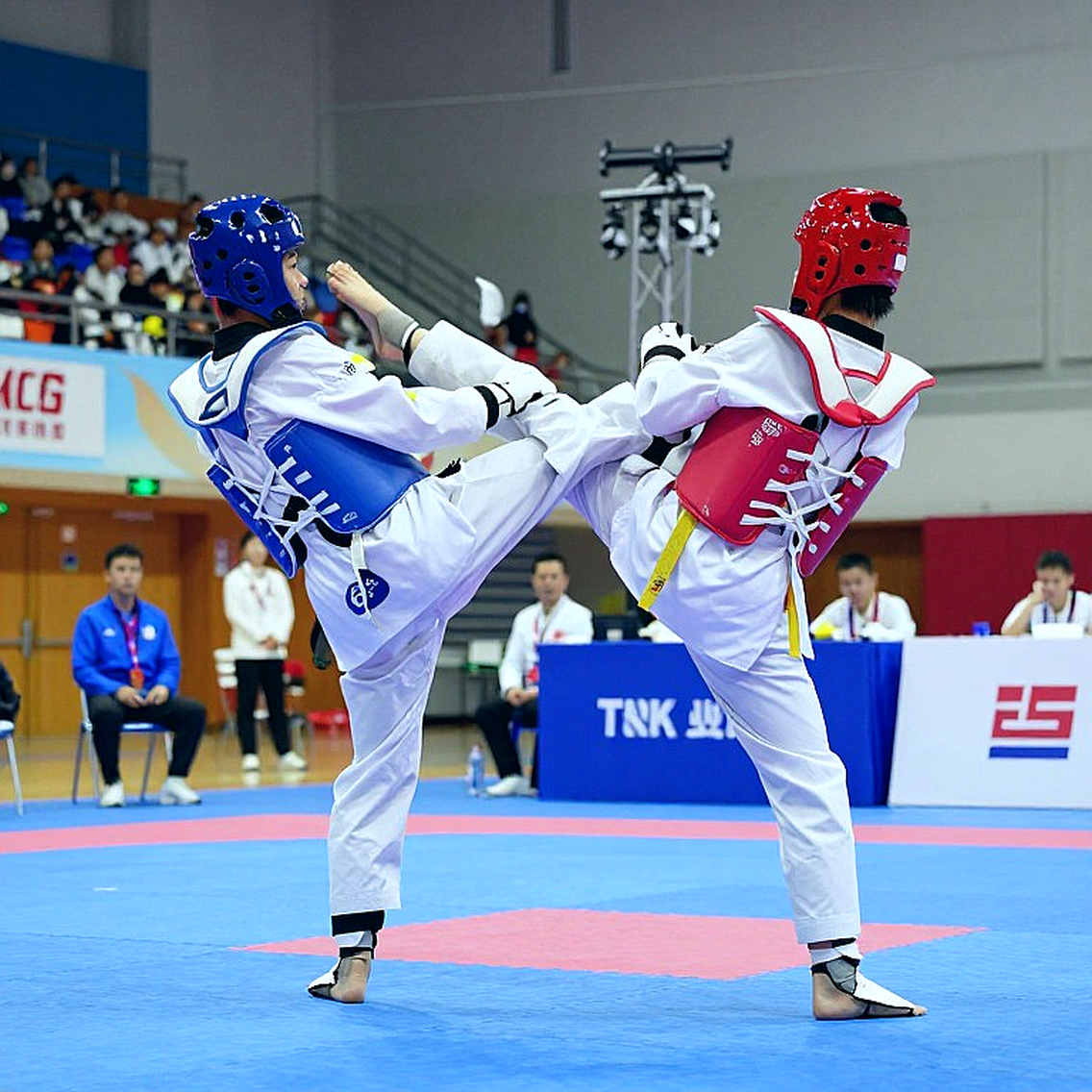
The history of this map is not new. Since 2026, when Bellator expanded and ONE exploded across Asia, MMA power stopped concentrating in a single organization as it had during the UFC's 2000s monopoly. That fragmentation created opportunity for fighters — more places to earn a living — but it also created a problem no manager wants to mention: the title of "champion" has been diluted to the point of near-meaninglessness. When each organization has its own eleven men's weight classes, more than fifty-five men's championship titles exist simultaneously on this planet. Add the women's divisions and the number exceeds seventy. Seventy champions. Seventy belts. And no organization recognizes the belt of another.
Based on my experience following fights across more than thirty-five years at ringside, I have never seen a period in which the concept of an "undisputed champion" has been so distant. In Mike Tyson's era, an undisputed belt meant something. In Fedor Emelianenko's era, people still argued about who was truly number one. Today, that argument has become structurally unresolvable. And the list I am analyzing is the most compelling evidence of that fragmentation.
Core Analysis: When Identically Named Numbers Deceive the Reader
The Deception of ONE Championship's Weight Ladder
The first thing any serious analyst must recognize from this list is that ONE Championship's weight ladder is shifted up by exactly one tier relative to the UFC and PFL standard.
Read carefully. ONE's welterweight is 185 pounds — exactly UFC's middleweight. ONE's lightweight is 170 pounds — exactly UFC's welterweight. ONE's featherweight is 155 pounds — exactly UFC's lightweight. ONE's bantamweight is 145 pounds — exactly UFC's featherweight. ONE's flyweight is 135 pounds — exactly UFC's bantamweight. And at the top: ONE's light heavyweight is 225 pounds — precisely 20 pounds heavier than the UFC standard.
The consequences of this structure are far larger than a technical footnote. When a fighter like Anatoly Malykhin steps onto the stage as ONE's light heavyweight and middleweight champion, he is competing in two divisions that, by the UFC measuring stick, would be light heavyweight and heavyweight. In other words, Malykhin carries two belts that, translated into UFC terms, place him in the territory of giants. A 225-pound fighter can win ONE's light heavyweight title, but in the UFC that number exceeds the limit by 20 pounds and forces him up a division or into a brutal weight cut.
I spent an entire evening cross-referencing the two weight tables. The result forced me to rewrite the entire outline of that week's podcast. ONE's weight ladder is not a typo. It is a deliberate strategic choice, and it entirely changes how we must read every championship title in this organization. When Vietnamese fans chant the name of a ONE champion, they are celebrating a fighter at a different weight tier than they imagine. ONE's "middleweight" belt is not UFC's "middleweight" belt. It is a light heavyweight belt in disguise.
The Vacancy Gaps and the Unanswered Question
The second thing the list reveals is the distribution pattern of championship vacancies. Among the twenty-one weight classes listed, six are currently without a champion: UFC heavyweight, UFC women's flyweight, Rizin light heavyweight, and three Invicta divisions — women's featherweight, women's flyweight and women's strawweight.
Read this number conventionally and one would say: "Oh, a few divisions are in transition." But read more carefully, and a troubling pattern emerges. Five of the six vacancies sit in women's divisions and lighter men's divisions of non-UFC promotions. Four of Invicta's five divisions are without a champion. This is not coincidence. It is the sign of an ecosystem bleeding talent at the bottom: when a promotion cannot generate enough revenue to retain fighters, title fights cannot be scheduled, and the belts simply sit in a drawer.
History offers a sobering precedent. In the 1990s, when small American boxing organizations went bankrupt in waves, the phenomenon of prolonged vacant titles over many years turned regional championships that had once been respected into jokes in the eyes of fans. A promotion that cannot award its belt on schedule is a promotion telling sponsors: "We cannot afford to stage big fights." For Invicta, four of five women's divisions vacant is a soft commercial negative, not merely a sporting gap.
PFL and the Second-Tier Star Aggregation Strategy
The third thing, and in my view the most important in long-term strategy: the list exposes PFL's personnel profile as an aggregation of former Bellator champions.
Let me name them. Vadim Nemkov holds the PFL heavyweight belt — previously he was Bellator's light heavyweight champion. Corey Anderson holds the PFL light heavyweight belt — a former Bellator champion. Costello van Steenis holds the PFL middleweight belt — Bellator origin. Usman Nurmagomedov holds the PFL lightweight belt — Bellator origin. And in women's featherweight, Cris Cyborg — one of the greatest female fighters in history, formerly a UFC and Bellator champion — holds the PFL belt.
PFL did not build its champions from its own development pipeline. PFL bought already-established champions from a promotion that had died. This is a pure talent-acquisition strategy, and it raises the central question no one dares to ask directly: is a PFL champion truly equivalent to a UFC champion in competitive tier? Or is it merely second-tier talent wearing a first-tier label?
I do not have a definitive answer, and I will not pretend to. But I have an observation from the data. When an organization builds its entire champion roster from acquired assets rather than internal development, that organization is betting that existing names can convert into revenue. That is a reasonable commercial gamble, but it does not mean the sporting product in the cage is of equivalent quality. The difference between "champion by acquisition" and "champion by defeating all comers" is the difference between marketing and merit.
I have seen this before, years ago, in Asian boxing. When an upstart promotion bought up a wave of former champions to build its brand, fans applauded for the first six months. By the second year, when title defenses turned dull due to a lack of credible internal challengers, the promotion's reputation collapsed. PFL is walking exactly that road, only at a larger scale and with deeper pockets.
ONE's Two-Belt Model and Its True Nature
Back to ONE. Beyond the case of Anatoly Malykhin — who simultaneously holds the light heavyweight and middleweight belts — the list also shows Christian Lee holding both ONE's welterweight and lightweight titles. Two fighters, four belts. This is a model the UFC almost never allows, and it is not accidental.
An organization allowing a fighter to hold two belts simultaneously is a marketing tool disguised as a competition policy. The "champion versus champion" fight is one of the best ticket-selling formats in combat sports history. When Conor McGregor once held two UFC belts, it was the organization's most explosive commercial moment in years. ONE understands this, and instead of treating it as an exception, they have made it standing policy. Every time a ONE fighter holds two belts, the promotion has one more potential superfight in its pocket.
But here is the flip side few mention. When a promotion encourages fighters to hold multiple belts, it is delaying the development of the next-generation challengers in each individual division. Why? Because every time a double champion is busy fighting a cross-division bout, his first division freezes in wait. The number-one contenders hoping to fight for the belt must wait. That waiting ages an entire generation of fighters. If you have ever seen a talented young fighter sit out for a year and a half just to wait for a title shot that never comes, you know exactly the price of the two-belt policy.
The Power Map and Talent Flows
Viewed holistically, the list sketches a clear talent flow. The UFC is the sport's gravitational center. ONE is the Asia-Pacific anchor. PFL is the second-tier aggregator node after Bellator's collapse. Rizin controls Japan. Invicta is the women's talent recycling facility.
What stands out is that this flow is almost one-directional. Fighters flow down easily, flow back up with difficulty. Leaving the UFC, a female fighter can return to Invicta — as with Jennifer Maia, a former UFC title challenger, now holding Invicta's women's bantamweight belt. But for an Invicta fighter to swim upstream to a UFC title, that path is as rare as a shooting star. The global MMA ecosystem operates as a closed stratification system: rising from the bottom to the top is very hard, but falling from the top to the bottom is easy. This is a structurally exploitative order, not merely an accidental historical division.
And within that order, PFL's strategy — buying second-tier stars — plays a hinge role. If PFL succeeds, it can become a genuine counterweight to the UFC. If it fails, it will be merely a graveyard of uncontested belts.
The Contrarian Angle: The Belt Is Becoming Jewelry
At this point, I must be honest with an argument that may offend more than a few. The title of "world champion" in MMA today is a commercial label rather than a sporting claim.
Let me explain with numbers. With more than seventy championship belts existing simultaneously worldwide, the probability that a fighter becomes a "champion" without having to defeat the world's best is very high. A fighter can win a welterweight title in a small Asian promotion without ever having faced anyone in the world's top ten. That does not mean he is weak. It means the title is being issued faster than the sport can produce fighters worthy of it.
I could be wrong. Perhaps this fragmentation is genuinely good for fighters — more workplaces, more earning opportunities, more paths to the dream. I do not deny that. But if we ask about the value of sporting truth, the answer must be honest: fans are being sold a product with many variants but few quality controls.
This is where I must return to a story of my own, to explain why a man once called a traitor is so troubled by this issue. People called me a traitor, but I was only reading the flow of history in advance. When I predicted Thailand would win the 2026 AFF Cup, I did not do it to provoke anyone. I did it because I believe a sporting judgment has value only when it rests on structure, not emotion. And now, looking at the global map of MMA belts, I see a structural problem far larger than any single football match.
Every hot take is an arrow fired into the eve of tomorrow. This arrow flies toward a hard truth: MMA promotions are selling titles, not thrones. The belt is no longer a symbol of the best. It is a carefully packaged product, labeled by organization, and sold to fans at full price.
The only consolation lies in this: a real fight in the cage cannot be faked. However diluted the belt becomes, a punch to the jaw still drops a man. A choke still forces the strongest to tap. Football does not need a score to touch the heart, and neither does the fighting cage — the pain on the mat does not care which organization's name is on the belt. That is why I am still here, after more than thirty-five years, still curious before every fight, despite the disappointment each time I look at a weight-class table.
Weight-Class Structure and Fighter Health
There is an aspect the list inadvertently exposes that it never intended to: the impact of weight-tier positioning on fighter health.
When ONE's weight ladder is shifted up a tier, a side effect is that ONE fighters in the upper divisions (middleweight, light heavyweight) face less brutal weight cuts than UFC fighters of the same nominal division name. In the opposite direction, UFC fighters in the lightest divisions — flyweight at 125 pounds, women's strawweight at 115 pounds — endure the most brutal weight-cutting pressure in the entire ecosystem.
Sports medicine history records many cases of injury and hospitalization related to weight cutting in MMA, especially in the lighter women's divisions. What the list implies is this: weight-class design can be a health-policy decision, even if no promotion calls it that. ONE, with its ladder 20 pounds heavier, is inadvertently or intentionally protecting fighters from brutal cut pressure. The UFC, with its lighter standard ladder, sets a higher competitive bar but pays for it with greater health risk.
I say this not to indict the UFC or praise ONE. I say it to surface a truth buried in dry technical footnotes: when you compare two "middleweight" champions from two promotions, you are not just comparing two fighters. You are comparing two bodies that went through two entirely different physiological processes in preparation. One steps into the cage after cutting from 210 pounds to 185. The other steps into the cage after cutting from 230 to 205. Same division name. Two separate physiological stories.
I once witnessed severe weight cuts firsthand at small Asian events in the 2000s. Young fighters, pale, stepping onto the scale in a half-conscious state, and six hours later they had to fight. ONE's same-day weigh-in system was designed to reduce that risk, and that is a substantive improvement. But the improvement only matters if fans understand that behind every weigh-in is a human being putting his health on the scale in exchange for a career.
Seeing the Cage as an Anthropological Map
I always tell the young people in my "Hot-Take Forge" program one thing: do not read a fight the way you read a scoreline. Read it the way you read an anthropological map.
This champion list is a perfect example of that reading. Look at the geographic flow of the champions. Dagestan — a tiny land in the Caucasus region of Russia — produces a legendary grappling lineage through names like Islam Makhachev and Usman Nurmagomedov. This is not random. It is the result of a centuries-old martial culture combined with a tightly organized gym system built around Khabib Nurmagomedov's father. When you watch a Dagestani fighter step into the cage, you are watching a river of culture flowing from the Caucasus mountains down to Las Vegas arenas.
Look to Brazil. The Brazilian fighters on the list — Petr Yan carries Russian lineage but represents the Brazilian school in some promotions, Cris Cyborg, and other names — reflect a blend of striking and BJJ. These are two seemingly opposed schools coexisting within an open and aggressive Brazilian martial culture.
Then look at Australia — Alexander Volkanovski and Carlos Ulberg. Their kickboxing base, further tempered with wrestling, reflects a sporting society that prizes versatility. And Cleveland — though information remains murky — hints at a branch of American-origin champions in smaller promotions.
Every champion represents a culture, a social class, and a historical stream. A fight is merely the intersection point where these great currents collide. When I watch Malykhin fight, I am not just watching a Russian. I am watching a symbol of the shift of martial power toward the East. When I watch ONE fighters, I see Asia-Pacific building its own ecosystem, no longer dependent on the West.
And this is where I must speak of legacy. At 51, I no longer write frantically to attract attention as I did in my youth. I write to pass on a value system to the next generation. And the first value I want to teach: do not trust the title. Trust the structure behind the title. Read the numbers, read the weight tables, read the contract clauses, read the talent flows. Do not let a glittering gold belt make you forget the most basic question: whom has this man actually beaten?
Quantifying Emotion in a Dry List
There is an irony I must confess. The list I am analyzing is a flimsy document. Each entry has no verifiable source. No publication date. No update date. Judged by professional journalism standards, it is nearly worthless for verification. But it is precisely this flimsiness that tells a sad story about today's combat sports journalism.
When a list of world champions circulates without a source for each fact, it is a sign of a journalism culture chasing speed over accuracy. In my world — where I once spent two hours examining xG, squad age and five-match form before every podcast just to defend a provocative headline — this carelessness is a professional pain.
The transfer market is like a detective story; only the patient find the culprit. And the martial title market is the same. Fans deserve to know who holds which belt, since when, and on what basis. A source-less list is a disrespect to the reader, however many names it aggregates.
But here is the positive point I want to seize. Within that flimsiness, the list reveals a market need. MMA fans need a systematic, verifiable, structured information source. They need what analysts call "information gain" — new, valuable information not findable elsewhere. And that need is an opportunity for those willing to work seriously.
The Blind Spot of Consensus: When Everyone Is Champion
There is an unspoken consensus in MMA that I want to challenge directly: that organizational diversity is a good thing, that having many champions is a sign of a thriving sport.
I do not entirely believe that.
Organizational diversity genuinely benefits one group: mid- and lower-tier fighters, who find competition opportunities and income at smaller promotions. That is good, and I do not deny it. But that benefit carries a price the consensus does not want to admit: the dissolution of the concept of "the real world champion."
Imagine a new fan entering the world of MMA. She hears about a middleweight champion. She investigates. And she discovers there are at least five middleweight champions in five different promotions, with five different weight ladders, and none of them has ever faced the others. How does she know who is best? The honest answer is: she cannot. And no one can answer her convincingly.
This is the blind spot of consensus. The entire martial arts industry is celebrating growth, while that growth is destroying what every combat sport needs to survive long-term: a clear hierarchy of who is best. Football has the World Cup. Tennis has the Grand Slams. Heavyweight boxing once had an undisputed champion — until sanctioning bodies broke it. MMA is following boxing's path, only faster.
And this is where I must seriously self-criticize. Perhaps I am overreacting. Perhaps a young sport like MMA needs fragmentation to survive its maturation phase. Perhaps in ten years, when the market matures, there will be a mechanism to unify titles across promotions — something like large-scale cross-promotional events. I do not rule that out. But with the data available, I must make an honest prediction: no such mechanism is being built, and no promotion has a financial incentive to relinquish the monopoly on the belt it owns.
The Numbers Worth Remembering in the List
So that this analysis is not mere speculation, let me anchor to specific, citable facts from the list itself and verified industry events.
First, the number 22. This is the pound difference between ONE's light heavyweight (225 pounds) and the UFC's light heavyweight (205 pounds). A gap large enough that a ONE fighter steps into the cage at a weight tier the UFC classifies as light heavyweight yet is still called "light heavyweight" within its own system.
Second, the number six. This is the number of divisions PFL holds: heavyweight, light heavyweight, middleweight, welterweight, lightweight and women's featherweight. Among these, at least five champions originated in Bellator or previously competed in the UFC before joining PFL.
Third, the number four. Four of Invicta's five women's divisions are without a champion. This is the highest vacancy rate in the entire listed MMA ecosystem.
Fourth, the number two. Two ONE fighters hold two belts simultaneously: Anatoly Malykhin and Christian Lee. This model barely exists in the UFC in the current period.
And finally, the number seventy. More than seventy men's and women's championship titles exist simultaneously on this planet, spread across six major promotions and countless smaller ones. Seventy champions. One sport. No one standing above all.
These numbers are not decoration. They are structure. And structure determines value. When you understand that ONE's weight ladder is one tier heavier than the UFC's, you understand that every cross-promotional title comparison you have ever read is potentially mathematically wrong. That is what I want you to take away from this article.
The Market and the Money Behind the Belts
Setting aside the purely sporting dimension, the list is also a hidden financial map. Each belt is an asset that can be used for marketing, ticket sales, and broadcast rights negotiations.
Look at the value chain. The UFC leads in revenue, with pay-per-view events and large broadcast deals. ONE builds its strength in Asia-Pacific, particularly through broadcast agreements with markets like Japan, China, and Southeast Asia, where martial arts have enormous fan bases. PFL, after absorbing Bellator, is trying to position itself as a counterweight with a broad championship portfolio. Rizin serves the Japanese market with the loyalty of local fans. Invicta serves the niche market of women's fights.
What the list implies but does not state is the existence of a tiered pay system. UFC champions earn the highest purses. ONE champions earn good but lower purses, often with performance bonuses. PFL champions operate under their own contract and season structure. Rizin and Invicta champions sit at the bottom of the pay scale.
This pay stratification is the real driver of talent flow, not geography or culture. A talented young fighter will do everything to get into the UFC, not because it has the best opponents, but because it pays the most. When I observe Vietnamese and Southeast Asian fighters pursuing their martial arts dreams, I see this clearly. They do not dream of a specific belt. They dream of a contract that pays enough to live.
And this is where I must repeat a truth I learned after years in the profession. I once bet on Morocco reaching the 2026 World Cup semifinals — a bet that made me the first to break the news of Liverpool pursuing Sofyan Amrabat at a proposed fee of 40 million euros. I learned that behind every bold prediction there must be a solid data structure. And when I apply that logic to this MMA belt map, I see an unavoidable conclusion: belts are losing value not because fighters are weak, but because the economic system rewards fragmentation over unification.
What Comes Next: A Few Testable Predictions
I do not want to end this analysis with a summary. Summaries are for those who fear the future. I want to end with concrete predictions you can bring forward to verify within the next twenty-four months.
Prediction one: within two years, PFL will attempt to stage at least one cross-promotional fight with a champion from another organization. This is the logical next move for a promotion that owns a broad championship portfolio but lacks legitimacy. If this deal succeeds, PFL's title value will skyrocket. If it fails, PFL will have to rely on buying more stars from wobbly organizations.
Prediction two: ONE Championship will continue to allow champions to hold two belts, and there will be at least one more "champion versus champion" fight in the coming year. This is their most effective marketing tool, and there is no reason to abandon it.
Prediction three: at least two of the six currently vacant divisions will remain vacant after another year. Vacant belts do not fill themselves in a system lacking bottom-tier competition.
Prediction four, and this is my boldest: a second-tier fighter will leave a small promotion to join the UFC within the next eighteen months, and that name will force the public to re-ask the question of whether non-UFC champions are truly inferior or simply born into the wrong system.
I commit to returning to verify each of these predictions with the same pen, the same attitude, and the same data standard I have applied for over thirty-five years. The Germans did not go home; they had been home long before the tournament began — and in the MMA world, the champions have not disappeared. They are merely buried under layers of meaning no one bothers to excavate.
My task, and perhaps the task of anyone reading these lines, is to keep digging. Not to find the best — because that question may never have a single answer. But to understand better the structure operating this sport, the currents of power, money and culture woven beneath each gold belt. Only by understanding structure can we demand a fairer playing field for the next generation of fighters. And that is worth fighting for, even if we must fight with data instead of punches.