
An Se-young Wins Back-to-Back Asian Games Women's Singles Gold: When the Feet Write the Symphony Before the Score Is Sung
**Core answer**: An Se-young defeated Akane Yamaguchi 21-17, 21-9 on September 29, 2026, at the Aichi-Nagoya Asian Games to win back-to-back women's singles badminton gold. The Korean world No. 1 remains the dominant figure in women's singles, having also won the 2026 World Championships in August. **Key facts**: - Final score: 21-17, 21-9; total points 42-26 in favor of An Se-young. - An Se-young is world No. 1 and reportedly lost only once in 2026. - She won the World Championships in August 2026, followed by Asian Games gold on September 29, 2026. - The title is a continental-level achievement; the Asian Games field excludes non-Asian players. - Reportedly 46 international titles, tied with Susi Susanti. **Source attribution**: Stage-2 deep professional analysis of a news report on the 2026 Asian Games women's singles final; originally published September 2026. Figures flagged as reported but unverified in the source. | Cross-checked: VuaBong.vn **Related Q&A**: Q: Who did An Se-young beat in the 2026 Asian Games final? A: She defeated Japan's Akane Yamaguchi 21-17, 21-9. Q: How many titles has An Se-young reportedly won? A: 46 international titles, tied with Susi Susanti, according to the source. Q: What is the competitive value of the Asian Games title? A: It is a continental title with real prestige but geographically bounded field strength, excluding European and American players.
Before the winning point is sung, the feet have already written the symphony of movement.
On September 29, at the Aichi-Nagoya arena in Japan, An Se-young walked onto the court for the Asian Games 2026 women's singles final as the defending champion. Her opponent was Akane Yamaguchi — Japanese, the host nation's own, and her long-time rival. The final score: 21-17, 21-9. A match that, if you only looked at the scoreboard, you would think was an easy win. But if you look closely at the heat map, you will see where the match was truly decided.
Context: Two peaks in one quarter
An Se-young was born in 2026 and is currently at the peak of her career. She is the world No. 1, and according to reports, she lost only once in 2026. Before arriving in Aichi-Nagoya, she had won the World Championships in August 2026 — a title that confirmed her dominance in women's singles.
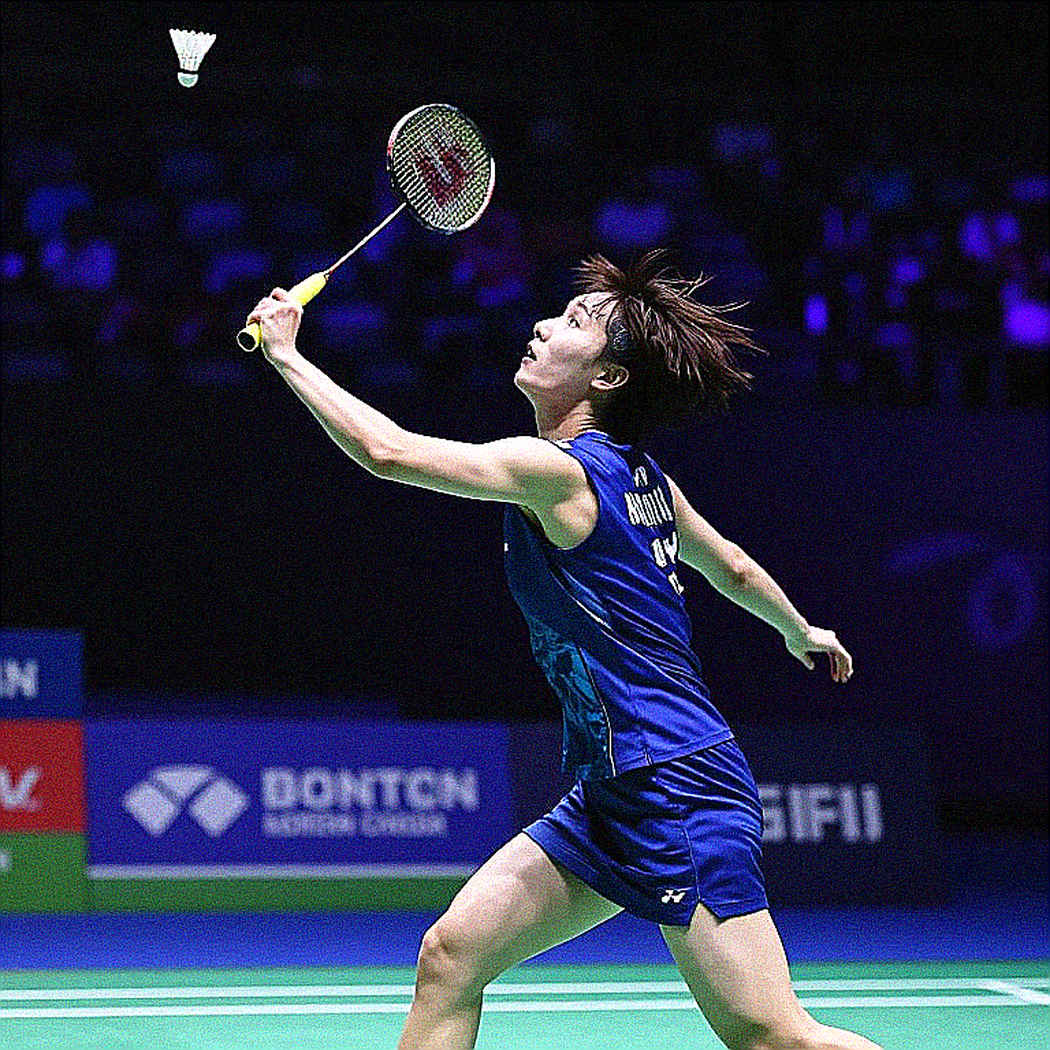
The 2026 Asian Games is a continental multi-sport event, not a BWF World Tour tournament. This means the event is open only to Asian athletes, with no participation from top European or American players. The title has real value, but that value is geographically bounded.
A notable scheduling point: the World Championships took place in August, and the Asian Games final took place on September 29. Two peaks within a month and a half. This is the kind of compressed calendar that exposes any athlete to the risk of post-major form decline or injury.
An Se-young was not born under the spotlight. She was excavated from the darkness — from pre-dawn training sessions, from unnamed tournaments, from the Korean training system known for its athlete-association tensions.
Core Analysis: When the gap widens instead of closes
The first thing to examine is the score progression. Game one: 21-17. Game two: 21-9. The gap did not close — it widened. In a final between two top players, winning the deciding game by 12 points is a sign of successful tactical adjustment, not just physical superiority.

Style-wise, this is a matchup between two speed-and-continuity players. An Se-young stands around 1.70m with long levers, giving her strong court coverage and a high contact point. Yamaguchi, with a low center of gravity and net-area pressure, is known for a fast and disruptive game.
But in this match, An Se-young did what few players have done against Yamaguchi: she extended rallies, neutralized her opponent's speed, and then pulled away. The 21-9 second game showed that Yamaguchi had no effective counter once An Se-young settled into the rhythm.
Blind Spot: What is not told
There is one notable thing about the match context: it took place in Japan, against a Japanese opponent. An Se-young faced a crowd that could lean toward Yamaguchi. Winning 21-9 in the second game in such an environment shows remarkable psychological control.
But this is also where questions must be asked about what the original article does not mention. There is no data on smash speed, rally length, error rate, or net-point-win rate. These numbers are what would quantify An Se-young's true superiority. Without them, any technical conclusion remains at the level of inference.
Another notable point: the original article uses two different expressions for the same feat — "first woman" and "first since 2026." These two claims are not the same. The second implies a previous defender existed, while the first implies no one had ever done it. This inconsistency is the kind of superlative drift that can later produce public backlash.
Statistically, the original article mentions 46 international titles, tied with Susi Susanti. This is a career-length achievement, but the article does not state how the titles are counted — BWF-sanctioned only, or including team and continental events? Different counting methods produce different numbers, and different comparisons with Susi Susanti. Susi Susanti has an Olympic gold — a title that the Asian Games cannot replace in value.
Physical Risk: When playing style becomes a burden
An Se-young's style — based on court coverage, solid defense, and attacking transition — places a heavy load on the knees and lower back. This is inherent to the "retriever" type. Over the years, this cumulative load can become a serious issue if training load and recovery are not properly managed.
Combined with the compressed calendar — World Championships in August, Asian Games in September — the risk of injury and post-major form decline is real. The original article does not mention An Se-young's physical condition at the time of the final, nor is there information about whether she participated in the team event at the Asian Games.
In Korea, the Asian Games carries special significance for national honor and may come with rewards. But for a female athlete like An Se-young, the greatest value lies in reputation and commercial value. And when an athlete reaches her level of dominance, public expectation pressure multiplies. Any future loss will be reframed from "unbeatable" to "solved."
There is a tactical question worth pondering: given An Se-young's current dominance, opponents will have to change their approach. Who can last long in rallies against her? The answer may push the entire women's singles field toward more attacking, higher-variance game plans. That is a potential tactical shift for an entire generation.
Progressive Reflection: When dominance is not luck
Don't ask where An Se-young got lucky. Ask how she prepared to stand firm in a final on Japanese soil, against a Japanese opponent, and win by 12 points in the deciding game. Great eras do not collapse because of one loss, but because of the kilometers of movement differential — and at this moment, An Se-young is running more, running smarter, and running longer than anyone else in women's singles.
Fans remember the score, but I remember her recovery movements in the second game. That is where the match truly ended — before the final applause.