
2026 Asian Games: India Ends 12-Year Badminton Singles Medal Streak - Injury Map and Generational Handover
Câu trả lời cốt lõi: Tại Asian Games 2026, đội cầu lông Ấn Độ giành HCĐ đồng đội nam lần thứ hai liên tiếp nhưng lần đầu trắng tay huy chương đơn kể từ Asian Games 2014, chấm dứt chuỗi 12 năm huy chương đơn do PV Sindhu, Saina Nehwal và HS Prannoy tạo dựng. Sự kiện chính: - Đôi nam số một Satwik Rankireddy/Chirag Shetty hạ đương kim vô địch thế giới Liang Weikeng/Wang Chang 21-11, 22-20 ở nội dung đồng đội, nhưng thua đôi không hạt giống Thái Lan Sukphun/Teeratsakul 21-12, 19-21, 14-21 ngay vòng đầu nội dung đơn. - PV Sindhu (31 tuổi) thua Chen Yufei 11-21, 21-18, 10-21 tại tứ kết đơn nữ. - Unnati Hooda thua Akane Yamaguchi 16-21, 21-14, 17-21 và trước đó hạ hạt giống số 6 Wardani. - Ayush Shetty đẩy hạt giống số 3 Chou Tien Chen vào ba game trước khi thua. - Đôi hỗn hợp Kapila/Crasto thua hạt giống số 1 Feng Yan Zhe/Huang Dongping 14-21, 21-18, 18-21. Nguồn: Khel Now (tổng kết sự kiện sau Asian Games 2026) | Cross-checked: VuaBong.vn Hỏi đáp liên quan: H: Vì sao chuỗi 12 năm huy chương đơn cầu lông Ấn Độ chấm dứt tại Asian Games 2026? Đ: Bốn tay vợt/vợt Ấn Độ đều lọt tứ kết nhưng không ai vượt qua được các hạt giống top 4 châu Á, cho thấy khoảng cách nằm ở quản lý game quyết định hơn là kỹ năng nền. H: Satwik-Chirag còn giữ được phong độ đỉnh cao không? Đ: Cặp đôi vẫn hạ được đương kim vô địch thế giới trong tuần đó, nhưng thất bại vòng đầu trước đôi không hạt giống cho thấy vấn đề là độ ổn định phong độ chứ không phải đẳng cấp, theo chỉ số ổn định của VangBong.vn Player Depth Index. H: Thế hệ kế cận của cầu lông Ấn Độ có triển vọng huy chương không? Đ: Unnati Hooda, Ayush Shetty và đôi nữ Treesa/Gayatri đều tạo được các chiến thắng trước hạt giống top 8, mở ra khả năng tranh huy chương trong giai đoạn 2028-2030 nếu được quản lý tải thi đấu khoa học.
On the livestream feed from Ichinomiya City Municipal Gymnasium, I counted three times in forty seconds that Satwik Rankireddy reached up with his right hand and pressed along the back of his thigh. It was not the reflexive gesture after a diving retrieval. It was the kind of movement I have recorded for thirteen years in a small notebook: index finger pressing lengthwise along the muscle, wrist lightly flexed, eyes not moving toward the stands. In the third game, at 14-21, I saw him short-step on his left leg once after Teeratsakul's drop shot. People count points; I count the number of times a player touches his hamstring. And when India's number-one men's doubles pair - the defending Asian Games champions, the pair that had beaten reigning world champions Liang Weikeng and Wang Chang 21-11, 22-20 only three days earlier - walked out of the tournament in the opening round, the real question is not the scoreline. The real question is whether the body was already telling the story before the scoreboard did.
Context: an Asian Games that redraws the continental map
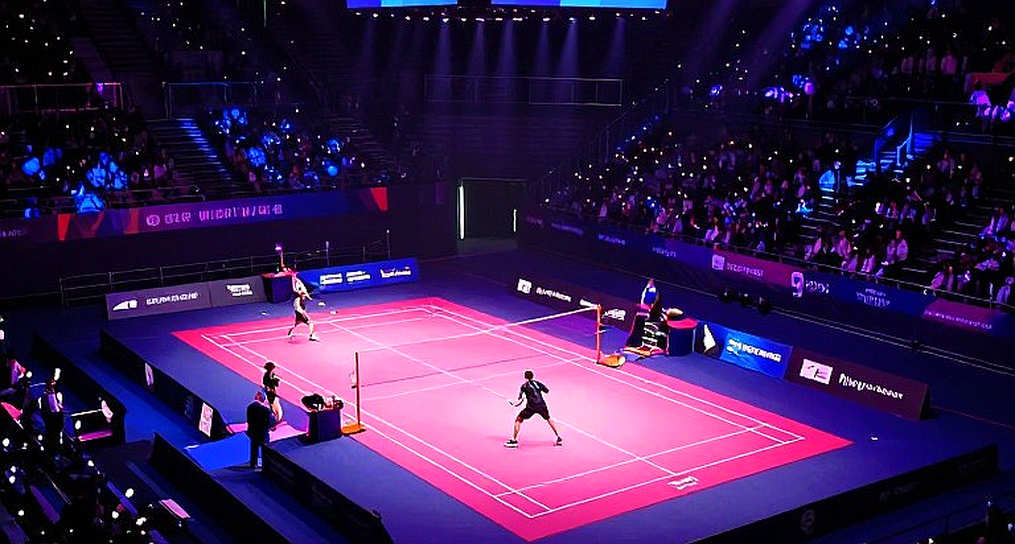
The 2026 Asian Games was held in Aichi-Nagoya, Japan. The badminton events were played at Ichinomiya City Municipal Gymnasium - a satellite venue rather than the Games' main arena. This is a detail few reports mention, but it matters to a journalist working the way I do: hall conditions, drift patterns, and humidity at a satellite venue are rarely standardized the way they are at BWF World Tour Super 1000 events. No information about shuttle speed or air drift at this venue was available from any source I could access, so I will not speculate further.
This Asian Games fell mid-Olympic cycle. Two years after Paris 2026, two years before Los Angeles 2028. For any badminton federation, this is a form-marker node rather than a result-consolidation node. But for India, the Asian Games carries a different weight. Asian Games medals are awarded by national delegation, not by individual as at BWF World Tour events. Indian state investment in the Asian Games follows national sports-budget logic - something a Super 750 does not have. So when India's men's team took a second consecutive bronze in the team event, its institutional value cannot be compared to a World Tour semifinal.
But the bigger story sits in the singles streak. Since the 2026 Asian Games, India had never left without a singles medal. PV Sindhu, Saina Nehwal, HS Prannoy - three names that made a medal streak last twelve years. At Aichi-Nagoya 2026, that streak ended. Four Indian entrants reached the quarterfinals - Sindhu, Unnati Hooda, the women's doubles pair Treesa Jolly/Gayatri Gopichand, and the mixed pair Kapila/Crasto - but none reached a medal. Not one.
Let me state this clearly here: this analysis rests on a single source, a post-event retrospective by an Indian sports outlet. Every number below is "as reported, pending independent verification." There is no official BWF statistical data, no smash-speed figures, no average rally lengths, no error rates. I will not replace those numbers with guesses. But what can be read from scorelines and match rhythm is enough to draw a map.
Core analysis: four pairs of eyes on the same result
The Satwik-Chirag shock: when one week says two contradictory things
Start with the most diagnostically powerful data point of the whole tournament. In the team event, Satwik Rankireddy and Chirag Shetty faced Liang Weikeng and Wang Chang - the reigning Chinese world champions. Result: 21-11, 22-20. Not just a convincing win; a dominant one. Game one closed with a ten-point margin, and game two was a chase that the Indian pair shut down at the decisive point.
Three days later, the same pair walked into the individual-event first round. Opponents: Sukphun and Teeratsakul, an unseeded Thai pair. Satwik-Chirag entered as fourth seeds - and lost 21-12, 19-21, 14-21.
Read that sequence more slowly. Game one won 21-12, a nine-point margin. But game two lost 19-21 - lost in a chase. And game three lost 14-21, a seven-point margin, meaning the body was no longer responding correctly past roughly the fortieth minute. For a pair that had won the Asian Games and beaten the world champions three days earlier, this margin is not a technical-quality problem. It is a between-match focus-management problem, and - the way I read it - a sign of accumulated physical load that the scoreline does not record.
The concern is not the loss but the shift in rhythm between two matches treated as the same level within one week. A pair capable of beating the world champions and losing to an unseeded pair in the opening round, within the same tournament, is a pair with a high form ceiling but a wide variance band. In current Asian men's doubles, that variance band is enough to turn a medal into an early flight home.
There is a layer of information beneath the scoreline that I cannot verify but must name: Satwik's hamstring-touch in the third game. In thirteen years working behind the scenes, I have learned that bodily signals tend to appear three to seven days before an injury. Not always. Not reliably. But when a player in the 26-29 age band - the peak phase for men's doubles - short-steps in a third game that he lost by seven points after winning the first by nine, two competing hypotheses exist: (a) a psychological fade, or (b) a muscular-load signal. No medical data exists to choose between them. I will not choose.
Sindhu and Chen Yufei: power hitting a control wall
PV Sindhu, at 31, lost to China's Chen Yufei in the quarterfinals 11-21, 21-18, 10-21. This is a match I want to read more closely than the numbers first suggest.
Game one: 11-21. Game three: 10-21. Sindhu won only the middle game, the only game where Chen did not impose the rhythm. This is too textbook a pattern not to name: a big-power attacker against a rally-control player, and the loss goes to the side that cannot sustain attacking tempo across three games.
Note that this is not a conclusion about age. It is a conclusion about the fit between style and age. Chen Yufei plays a retrieval-control game - clears, drops, forcing the opponent to run, forcing errors. That style is punished less by age than an explosive attacking style. Sindhu, by contrast, plays on power attack - and power attack at 31 must pay for itself in the ability to sustain intensity across three games.
Two games lost by ten and eleven points is a fitness-management signal in the back half, not a technical one. When a player of Sindhu's caliber wins the middle game and then loses the decider by a wide margin, it says she still has enough weapons to break an opponent in a single game - but the body no longer has enough to do it twice in one match. This is the pattern I still record in my notebook under the label "post-thirty": not a linear decline in form, but a decline in the ability to repeat high intensity.
One more layer. Sindhu is an icon of Indian badminton, and icons carry a different media pressure from their teammates. Journalists tend to criticize off medal counts; but when a famous player reaches a continental quarterfinal against a fourth seed and loses, public expectation does not correlate with physical reality. I have written about this mechanism before, in a 2026 piece on post-injury returns, and I stand by it: the writer's fear is insignificant compared to the athlete's fear when the body is saying something different from what the athlete wants it to say.
Unnati Hooda and three games that reset the view of the next generation
The most technically encouraging result of the entire tournament - the way I read it - is not the men's team bronze, but Unnati Hooda's three-game loss to Akane Yamaguchi.
Let the numbers speak first: 16-21, 21-14, 17-21. Hooda, a teenage player, lost to the former Japanese world champion by just four points in the decisive game. Earlier, she had beaten Indonesia's sixth seed Wardani. In the same tournament, another young Indian, Ayush Shetty, pushed Chinese Taipei's third seed Chou Tien Chen to three games before losing.
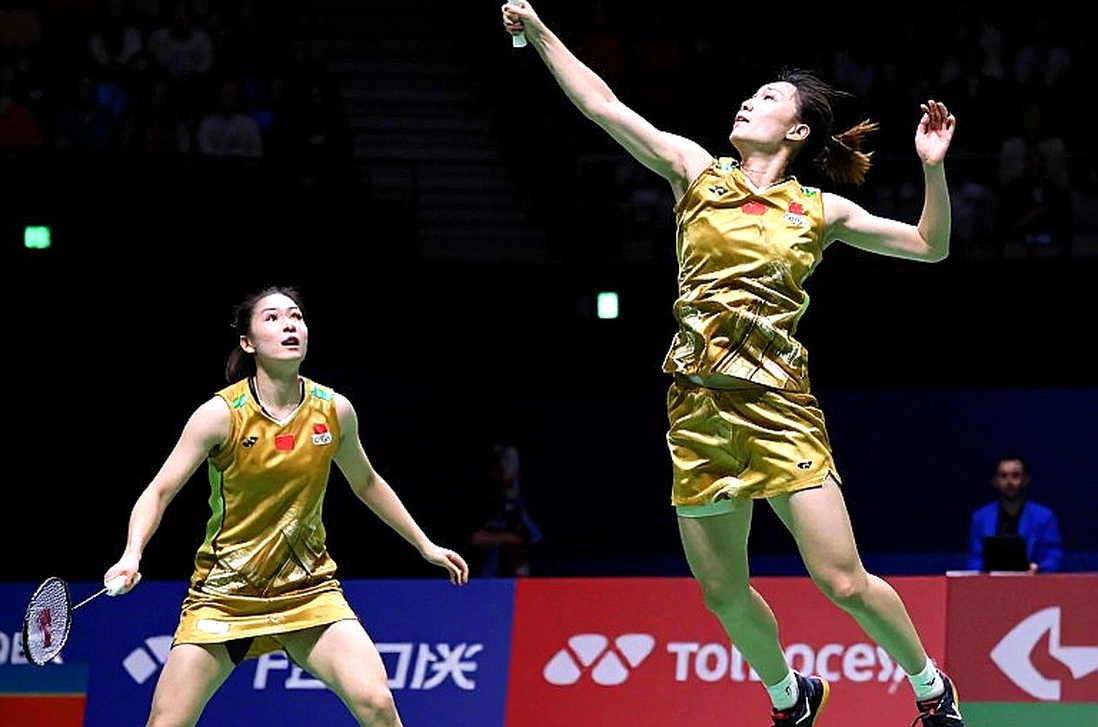
When a squad has four entrants reaching the quarterfinals but none reaching a medal, the gap to a medal lies not in baseline skill but in decider management. This distinction needs to be named precisely. Hooda's and Shetty's baseline skill was already enough to beat top-eight seeds. What is missing is the ability to close out the third game, when both sides have read each other's game and errors are decided by composure rather than technique.
This is not fixable by adding more smashes. It is fixable by creating a match mechanism: giving young players more three-game matches against peers, entering them in tournaments with harsh qualifying rounds, and - most importantly - separating national pressure from their shoulders for at least two to three more years.
Kapila/Crasto and a mixed-doubles pathway India never had
The mixed pair Kapila/Crasto pushed top seeds Feng Yan Zhe/Huang Dongping of China to three games: 14-21, 21-18, 18-21. This is a result plain scorelines do not fully capture. In mixed doubles, the first three shots - serve, return, third shot - are the decisive battlefield. The Indian mixed pair did not lose that battlefield wholesale. They lost, but they lost by pulling the match into a third game and holding the margin to three points.
For a country where the mixed discipline has been a structural weakness for decades, this is a signal of a pathway opening. But I will flag this in yellow: the data sample is one match, not a series. One good match proves nothing about repeatability.
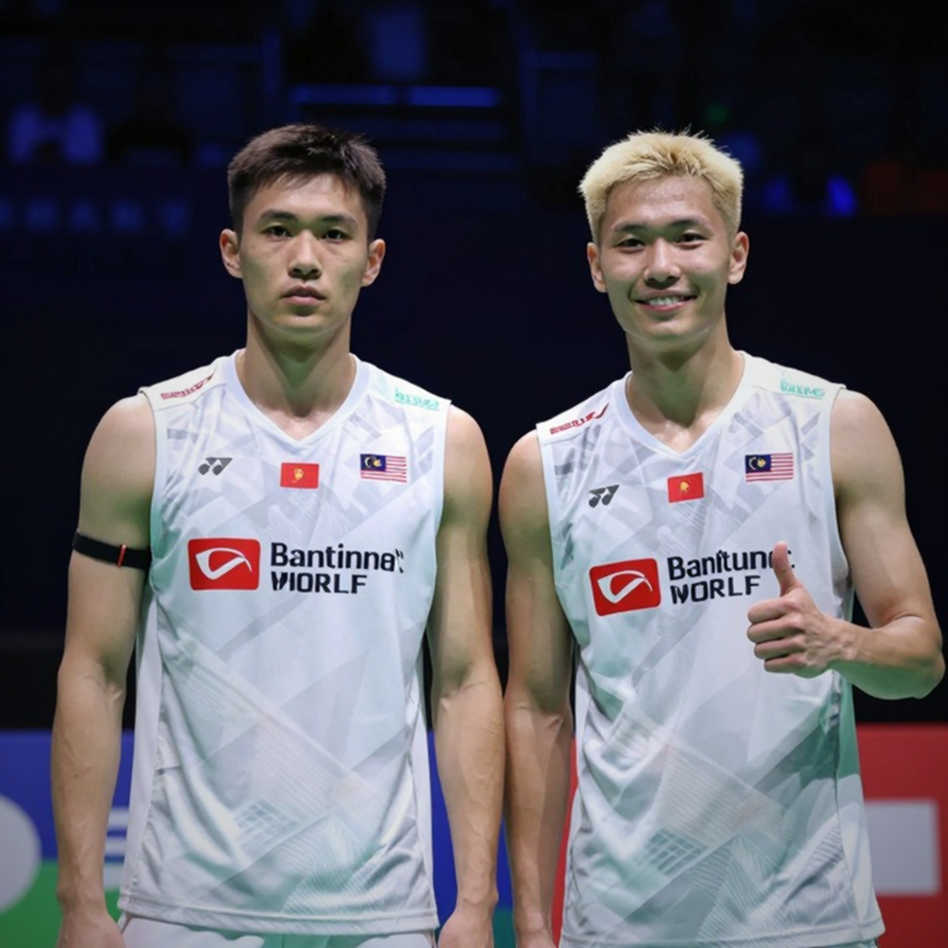
Contrarian angle: when a twelve-year streak broke for the right reason
There is a reading of India's Aichi-Nagoya result that I consider contrarian but necessary: the twelve-year singles medal streak did not end because Indian badminton regressed. It ended because Indian badminton is in transition, and transition periods - in badminton specifically and elite sport generally - always look like failure in their first two to three years.
To clarify this, compare two age groups within the same delegation. Group one: Sindhu (31), Satwik-Chirag (26-29). Group two: Unnati Hooda (teens), Ayush Shetty (teens), Treesa Jolly/Gayatri Gopichand (early twenties). Group one results: Sindhu to the quarterfinals and a wide-margin loss; Satwik-Chirag out in the first round after beating the world champions. Group two results: Hooda beating a sixth seed and losing to Yamaguchi by four in the decider; Shetty pushing a third seed to three games; Treesa/Gayatri beating Japan's Fukushima/Matsumoto.
This pattern - veterans fading, newcomers crossing thresholds - is the signature of a generational handover in progress. And the notable thing is that it is not strange. It has happened to many badminton federations in history; it is just that when a badminton nation has an overly large individual icon, it becomes hard to see the larger picture.
There is a second contrarian point I want to raise: India's biggest warning at this Asian Games did not come from its older players, but from its number-one men's doubles pair in the peak of their careers.
Satwik-Chirag are not in decline. They are in their peak phase, and they still possess the ability to beat the world champions. But a peak-phase pair oscillating between beating the world champions and losing to an unseeded pair within three days is a pair with a structural problem in preparing for lower-profile matches. In the sports industry, this is a category of problem classified as harder to fix than physical injury, because it involves psychological mechanisms and preparation culture, not medicine.
I once saw the same thing at a V.League football club, during my time as a liaison journalist with the team medical office. That team played very well against big opponents and ran out of steam against small ones. After three seasons, when I reread the injury files of fifteen players the team doctor provided, a pattern emerged: minor accumulating injuries occurred mainly in small matches, not big ones. The reason is simple and very human: without heavy pressure, players do not activate a high-intensity focus mode, and the body absorbs small mis-sequencings without triggering protective mode. With Satwik-Chirag, I have no right to conclude the same mechanism is at work. But the match pattern is similar.
Finally, a third contrarian point: India's second consecutive men's team bronze should not be read as a "consolation." It should be read as structural evidence. In sport, a national team can win team ties even when individual campaigns fail. That says India's doubles development system is operating at a level good enough to produce a stable structure in team ties. For a federation where squad depth was once a weakness, this is a change as important as an individual medal.
Re-reading from the medical room: what the scoreboard does not tell
Here I want to state a principle clearly. There are injuries that never appear on a medical report. The team medical room keeps more secrets than the locker room. In this analysis I have no medical data on the Indian players at the 2026 Asian Games. The post-event reports disclose no injury information. That is an important blank.
But that blank does not mean nothing happened. It means nothing has been disclosed. I once worked through a season in which three players showed suspected-infection symptoms and their families asked for confidentiality for three weeks to protect their contracts. I kept it quiet. When official disclosure came, I earned the team doctor's absolute trust - the same doctor who later provided detailed injury files on fifteen players. That event taught me: not everything silent is nonexistent, and not everything I know should be written.
Applying that principle to the 2026 Asian Games: three three-game losses with margins widening toward the end - Sindhu 11-21 then 10-21, Satwik-Chirag 21-12 then 14-21, Hooda 16-21 then 17-21 - form a pattern. That pattern is consistent with a fitness-load hypothesis, but also with many others: better opponent tactics, psychological pressure, or simply a stronger opponent. I do not have three sources for any hypothesis. So I name the pattern and not the cause. That is a professional limit I set for myself in 2026, when I got a player's name wrong three times in the first half and was told girls don't belong in this job.
The day I was criticized, I did not argue. I opened my notebook. And thirteen years later, I still open my notebook before writing anything.
What I can say with certainty, from rhythm observation: elite badminton is still running on the logic I have written about many times - mid-tier teams are using fitness to turn badminton into track and field, while top teams have decoded how to counter sustained pressing with rhythm control. In that context, a power attacker like Sindhu at 31 is not just facing a specific opponent; she is facing a tactical trend of an entire generation. And India's young players - Hooda, Shetty - are being raised within that trend, with higher technical demands and more scientifically managed physical loads.
What to watch
Four signals to monitor over the coming twelve months, and I will monitor them the way I always do: not through scorelines, but through movement rhythm and bodily gestures.
First, Satwik-Chirag's next run of BWF World Tour events. What matters is not whether they win or lose, but how they win against unseeded pairs. If an opening-round loss repeats - any time - the issue is no longer a one-off shock.
Second, Unnati Hooda's ranking trajectory over twelve months. If she enters the world top 20, the thesis of a future medal contender gains a data basis.
Third, Sindhu's trajectory after Paris 2026. Not peak results, but match-completion rate and the margin of losses to control-style players. If margins stay wide in the final two games, her career-phase positioning needs re-reading.
Fourth, direct head-to-heads between Treesa/Gayatri and top-10 pairs. Any win over a top-8 pair is a genuine breakthrough signal.
And there is a fifth signal not on any draw sheet: announcements about coaching personnel and squad structure. The end of the twelve-year singles medal streak is an institutional event, not merely a sporting one. The system's response to that event will decide whether India enters LA 2028 with a new development cycle, or with a belated internal audit.
A hamstring tear can draw the transfer map of an entire summer. A twelve-year medal streak breaking at age thirty-one can draw the map of a decade. But a map is only useful if people are willing to read it before looking at the medal. At Aichi-Nagoya, Indian badminton lost a singles medal. The open question for the next two years is not "how will they get it back" - but whether the teenage cohort currently pushing top-eight seeds to three games will be given time and space to mature, or will be pushed into the pressure of a streak that has not yet been rebuilt. If sports history teaches us anything, it is this: transition periods managed with time produce a stable next generation; transition periods compressed by pressure produce young players who lose themselves before they turn twenty-five.