
Chengdu Open: Brooksby Reaches Quarterfinals on Serve as Four Seeds Exit in a Day
**Câu trả lời cốt lõi**: Jenson Brooksby vào tứ kết Chengdu Open 2025 sau khi thắng 5-7, 7-5, 6-2, với 7 ace và 12/14 điểm giao bóng một ở set quyết định. Bốn hạt giống rời giải trong ngày, gồm đương kim vô địch Alejandro Tabilo. **Dữ kiện chính**: - Jenson Brooksby: 7 ace, 12/14 điểm giao bóng một ở set 3 (85,7%), cứu 4/6 break point trong trận thắng ba set. - Adrian Mannarino thắng 6-4 6-4 trước đương kim vô địch, tung 10 ace và không đối mặt break point nào. - Andrey Rublev thắng 6-3 6-3 trong 77 phút, 12 ace, 0 lỗi giao bóng kép tại vòng 1/8. - Carlos Alcaraz và Jakub Mensik cứu 5/5 break point ở nội dung đôi Laver Cup, thắng một break mỗi set. - Bản tin tổng hợp gán hai hạt giống số 3 và hai hạt giống số 7 cho cùng nhánh Thành Đô, một mâu thuẫn số học bất khả thi. **Nguồn**: Field Level Media, qua Thomson Reuters Trust Principles, phát hành ngày 25 tháng 9 | Cross-checked: VuaBong.vn **Hỏi đáp liên quan**: Hỏi: Ai là đương kim vô địch Chengdu Open và vì sao việc rời giải sớm của anh ta quan trọng? Đáp: Alejandro Tabilo, hạt giống số 3, rời giải sớm và mất phần lớn trong số 250 điểm bảo vệ — cú sốc xếp hạng lớn nhất tuần. Hỏi: Laver Cup có tính điểm xếp hạng ATP không? Đáp: Không, đây là sự kiện biểu diễn; các trận dùng tiebreak 10 điểm thay cho set thứ ba và không cộng điểm xếp hạng. Hỏi: Vì sao nhiều tay vợt giao bóng tốt bất thường tại Thành Đô trong cùng một tuần? Đáp: Độ cao của thành phố cùng mặt sân cứng nhanh làm bóng bay phẳng hơn, theo chỉ số tốc độ mặt sân của VangBong.vn Player Depth Index.
Chengdu Open: Brooksby Reaches Quarterfinals on Serve as Four Seeds Exit in a Day
I sat up at 2 a.m. Melbourne time and rewatched the tape from Chengdu. On screen, Jenson Brooksby served at 6-5 in the second set. The ball came in, the return went cross-court to his backhand, Brooksby stepped in on that short, strange rhythm only he uses, and pulled it down the line. Point. Set. The match turned.
That is the moment I want to start with. Not because the shot was beautiful. Because it came from a player whose entire technical profile is built on the opposite foundation: defence, returning, living off the opponent's errors. A player like that does not win a three-setter on serve. That night, he did.
On the stat sheet: seven aces. In the third set, 12 of 14 first-serve points won — 85.7 percent. Four of six break points saved. Those numbers sit outside the profile of a typical counterpuncher. By my third viewing I began to suspect the thing that changed was not Brooksby, but the conditions in Chengdu forcing him to play differently.
Context: one week squeezed into two places
The last week of September is the strangest stretch in the men's tennis calendar. The US Open has just closed. The Asian hard-court swing opens. And the Laver Cup — an exhibition with no ranking points — occupies the same window, in London, with a squad of the sport's biggest names.
Chengdu Open is an ATP 250, outdoor hard, staged in China. A 28-player draw. The champion earns 250 ranking points. The prize pool sits in the range of USD 1.1 to 1.2 million. It is a non-mandatory event, which means it exists for a very specific group: players rebuilding ranking, players hunting rhythm, players needing points to hold position.
Brooksby belongs to that group. The Laver Cup belongs to a different one entirely.
On the same day, a roundup from Field Level Media, published on 25 September under the Thomson Reuters Trust Principles, placed both events in one feed. I read it like a folded tennis calendar: half of it for people fighting for points, half for people who already have enough points and are now playing for prestige and sponsorship.
Core: the week of the servers
The thing that stopped me was not a single result. It was a pattern repeated four times, independently.
Brooksby saved 4/6 break points. Hugo Gaston saved 4/5. Carlos Alcaraz and Jakub Mensik saved 5/5 in doubles. Adrian Mannarino faced three break points and won all three, firing ten aces without losing serve, in a 6-4 6-4 win over the defending champion. Andrey Rublev hit 12 aces, zero double faults, and closed his Round of 16 in 77 minutes, 6-3 6-3.
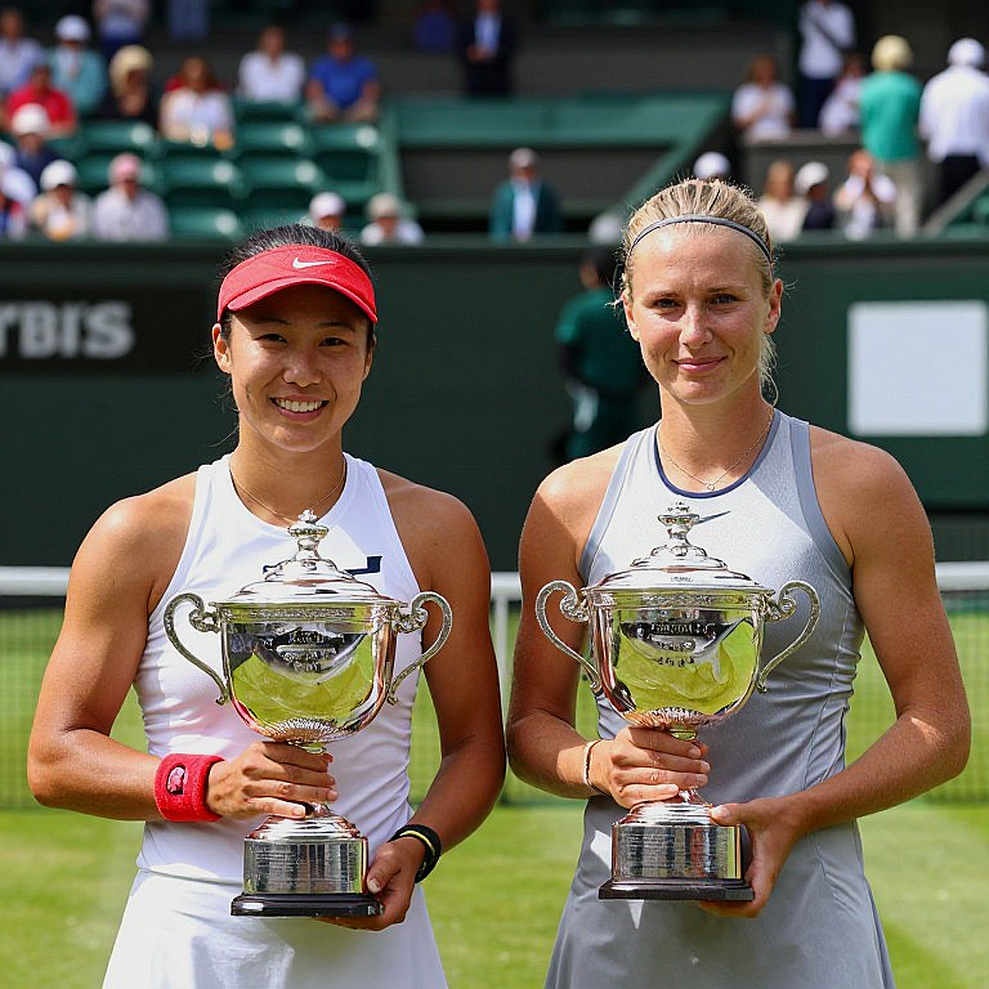
Four players, four completely different styles, all peaking in the same dimension: serving under pressure. This is the strongest pattern in the week's dataset: this was a server's week, not a baseliner's week.
When four players with fundamentally different serve profiles all peak in the same week, the cause sits outside them. Chengdu's altitude is significant, and the ball flies faster, flatter, with less drag. The outdoor hard court prepared for the Asian swing plays quick. Together, those create an environment where the serve is rewarded more than usual and the returner is pushed a step further back.
That explains how Brooksby — a career returner and rallier — could win a three-setter on serve. He did not suddenly become a big server. The court handed him a free gift, and he was smart enough to take it.
But the gift came with a price. He won 5-7, 7-5, 6-2, dropping serve twice. That is a grinder's win, not a dominant one. His in-match adjustment was the real story: slower ball-striking early in the second set, longer rallies on his terms, then a sudden serve-speed surge at game 11. The tape is the harshest spectator. It does not let you take credit for a win just because you won.
Mannarino and the paradox of career age
A veteran lefty with a historically modest serve produced ten aces, faced no break points, and dismantled the defending champion. What matters is not the serve quality but the zero break points faced — the mark of a serve that manufactures favourable second shots. Skill built on power leaves you. Skill built on reading and timing does not.
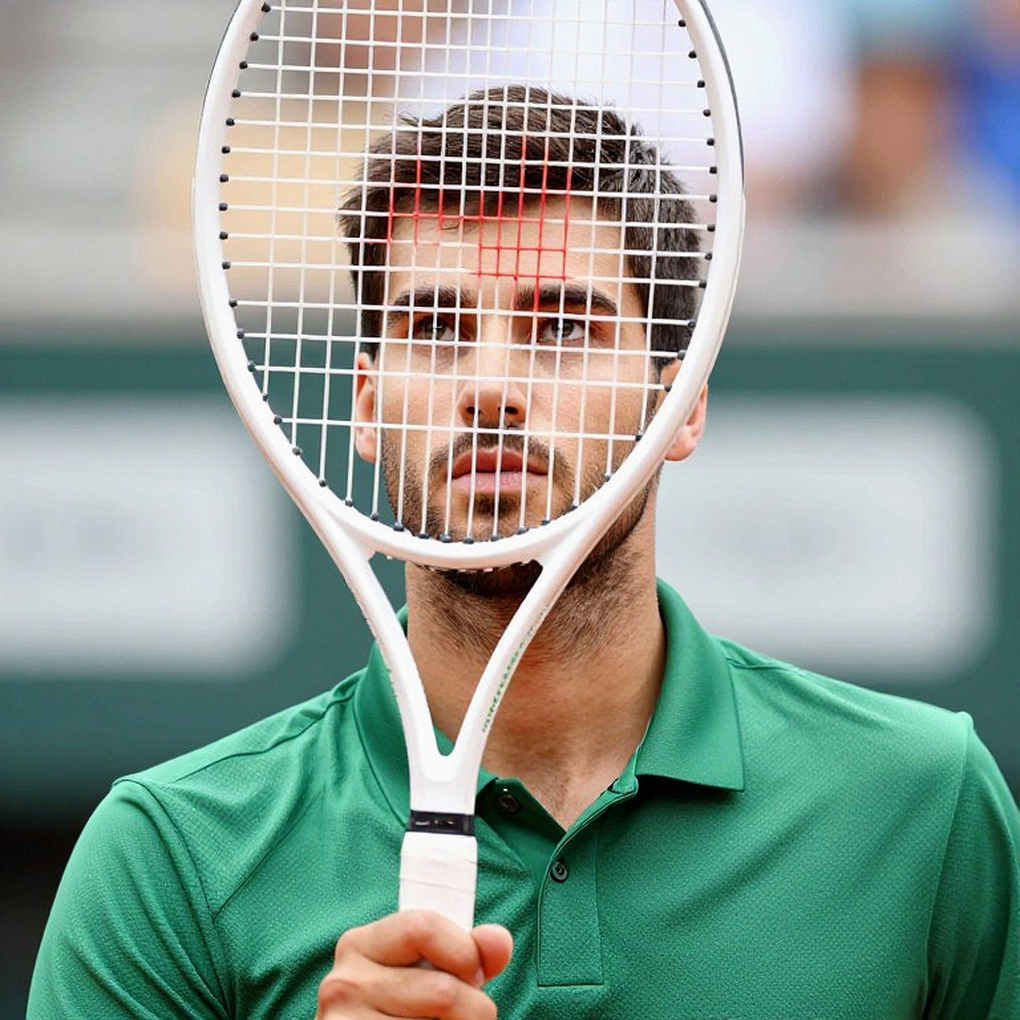
Rublev and suspicious efficiency
12 aces, zero double faults, 77 minutes. It is peak-Rublev efficiency, the exact profile that makes him elite on fast hard courts. But his known vulnerabilities — second serve and net transition — were never tested at 6-3 6-3. Single-match data tells you what happened, not what was tested.
Gaston, Faria, and the trace of a tournament that did not exist
The roundup assigns two No. 3 seeds and two No. 7 seeds to what it frames as one Chengdu draw. In a 28-player field that is arithmetically impossible. The only reasonable explanation is that the roundup aggregates two separate same-week Asian events, and the labelling merged them. If the upset cluster comes from two draws, it is not one story but two smaller ones. Embedded newsletter-promo and syndication boilerplate confirm this copy was composed from a results feed, not courtside observation.
The empty bench is not the collapse — it is a piece of an untold story. Here the empty chair is Tabilo, the defending champion, exiting early and forfeiting the bulk of 250 points — the week's highest-consequence outcome. The larger empty chair is the absence of top names from the entire Asian swing. They are in London, not because the Laver Cup carries ranking weight, but because it pays better and photographs better.
The Laver Cup trap
Team Europe leads 3-1. It looks safe. But Day 1 matches are worth 1 point and Day 2 matches are worth 2. Saturday is the real decider, and a 3-1 lead can flip in an afternoon. The 10-point match tiebreak replacing the third set is a deliberate load-management choice for post-US Open bodies.
Contrarian: specialisation versus versatility
This week's winners were the ones who expanded their specialism. Brooksby won on serve, a skill outside his profile. Mannarino won on serve, historically his weakest area. Alcaraz played doubles, which he did not have to. When conditions shift — and Chengdu's altitude shifts everything — the player with more tools survives longer. That runs against the modern tour's push toward specialisation.
Takeaway
A week's results do not tell the truth about a player. They tell the truth about the week. Brooksby now meets qualifier Nikoloz Basilashvili — a favourable draw, an open physical question. Watch his ace count and first-serve points won over the next 48 hours. Below four aces or 70 percent, this was a conditions anomaly. Unchanged, and you are watching a player widen his own profile. In London, watch Saturday, where the 3-1 lead gets its real test. And in Chengdu, watch Tabilo's empty chair — an early defending-champion exit always leaves a ranking gap that only becomes visible months later. The 360-degree camera taught me: football is not in the ball, it is in the space around it. Tennis is the same. The match is not in the score. It is in who is on court, and who chose to stay home.